Saturday, April 25, 2009

Prodigal Summer: Meticulous Metaphors: Amorous Animals

I think that it's apparent now how much metaphor Kingsolver puts into her novels. Some critics say that metaphors are old fashioned, while others say that modern generations are losing the taste for metaphor that was evident in the Shakespearean era. While this is the final metaphor post for Prodigal Summer, I would just like to add, before I start the analysis, that I think metaphor is one of the most quality aspects of writing. Both the deepest depth and fullest-spanned breadth can be expressed with metaphor. Kingsolver's metaphor is unique, such that every time the metaphor comes up, another level of the depth is added on to it.
Moths. Predators. Birds. Chestnuts. Butterflies. Trees. These are all aspects of the largest metaphor of this novel: wildlife. At first I thought this metaphor simply included animals, and nothing else. I proceeded with finding a meaning behind each animal mentioned more than twice (moths, predators, birds). While the wrong overall approach, I think dissecting the metaphor of wildlife in this way will make it easiest to understand.
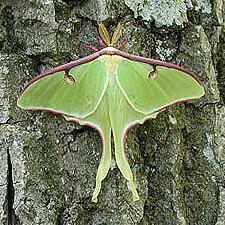
I'll start with moths. It may seem easy to understand the metaphor because of Kingsolver's way of titling sections with "Moth Love," "Old Chestnuts," and "Predators," but figuring out who each of these titles represents is just dipping your foot into the shallow pool of metaphor. Kingsolver is quick to use her moth metaphor to describe the relationship of Lusa and her late husband. The thing you must understand is that "moths speak to each other...by scent" (Summer 47). Moths "tell their love across the field" (Summer 47). Lusa described her morning, with her husband outside in the fields and she in the kitchen, as "perfectly windless and scentless" (Summer 47). This tells us that they basically had a loveless relationship toward the end of his life. Nevertheless, Lusa mourned when her husband passed. The depth of their relationship went deeper than one would suspect. This pushes me to inquire whether or not the moth metaphor goes deeper than I would suspect.... Are moths simply representative of people? Since humans are a species of mammals in this world, are we, from a global perspective, merely another species of animal?

Or, instead, are we the quintessential species?

From the layman's perspective, humans are prime! We are the furthest evolved, most intelligent, and conscious beings on the earth, which is why we rule what we rule, we conquer whatever land we want to conquer. The only things standing in our way are other humans. We own animals! We domesticate them, and put them to our use. This must be true because animals don't drive, sail, or build. Animal's can't control an airplane, complete a math test, or understand how a seesaw works. We are the fundamental living things on this earth.

What would Barbara Kingsolver say? Rather, what would she write?

Well, she has written! Her words, rather her animal metaphor, in Prodigal Summer clearly state her main point. At least, it's clearly stated after doing some thoughtful digging. The different animals are symbolic for the different emotions humans feel. The moth represents love. This has been explained above, through the comparison to Lusa's loveless, scentless, life and a moth's way of using scent to express love. It is expressed again, in a way, when Lusa says she's "like a moth...flying in spirals" (Summer 163). Infatuation sometimes befuddles us, and so going in spirals while in love would be expected.

The predator metaphor starts with Deanna's friend Eddie, who was "watching [her] like a damn predator and [thinks he has her] now" (Summer 99). The predators in all of us lurk in the shadows until the moment comes when they overtake our minds. The predators are anything from forbidden desires to sinful urges. This metaphor now seems complete... but this is Kingsolver we're reading. There's always more to come....

"To kill a natural predator is a sin" (Summer 179). This sentence provides that subtle hint of depth to the metaphor, which Kingsolver never leaves behind. People are diverse. The world contains different races, just as "out in your field you have predators and herbivores" (Summer 274). Punishing someone because of their race, their place in the food chain, is unthought of in Kingsolver's mind. Predators and herbivores alike must be accepted, embraced by nature, because they are a part of this life-filled world. Life, may it be an old chestnut, a lithe bird, or a grand tree, is precious. Life is a rainbow of color only because of the myriad of living things that inhabit the Earth.

~Father Nature, Editor

Friday, April 24, 2009

Prodigal Summer: Meticulous Metaphors: Extinct Ghosts

Ghosts make the embodiment of the next metaphor, as previously mentioned. The ghosts of Kingsolver's mind are not poltergeists, ghastly, or mal-intended. Rather, they represent the lost, forgotten, lifeless souls of extinct animals. Lusa calls herself "as free and disembodied as a ghost" when "she was free" because her husband, now past, wasn't lying with her in the morning (Summer 48). This starts the reader off with believing that ghosts are positive beings that are okay to compare yourself to. However, the general outlook on ghosts is the complete opposite.


So which ghost is Kingsolver implying in her metaphor? Are ghosts her pathway to stating a deep and precise point, which I just don't understand? Based on the prying of her work thus far, I think that every metaphor repeated at least twice has a depth that the reader really has to dig to discover.
With this mindset, I have observed that Kingsolver has used ghosts to describe extinction three times: "The ghost of a creature long extinct was coming in on silent footprints" (Summer 63). "As if they were already ghosts, mourning their future extinction" (Summer 66). "He was haunted by the ghosts of these old chestnuts, by the great emptiness their extinction had left in the world" (Summer 128). This metaphor makes sense, because extinct species are ghosts of life. This would match Kingsolver's nature theme because it serves as an outreach to save endangered species from becoming extinct; saving animals from becoming ghosts. However, the essence of Kingsolver has left its mark on this metaphor; we can dig deeper.

Kingsolver's metaphor deepens just as a murder plot thickens: "Lusa... was living among ghosts" (Summer 76). Kingsolver describes the scene as having "ghosts everywhere, even here in the neutral guest bedroom where Lusa had hardly spent an hour of her life before this" (Summer 75). This perspective portrays ghosts as a metaphor for memories. When in mourning, Lusa sees ghosts everywhere in her life. One would assume that a widow would see images of her late husband all around her household, even in places she hardly spent time in. When something is constantly on your mind, you may start imagining that it becomes real. This must be the depth that Kingsolver wanted to get to for the first 350 pages of this novel.

However, Lusa actually gives an explanation for the ghosts she speaks of. By ghosts, she means "stuff you can't see...certain kinds of love you can't see" (Summer 357). She says that she believes in this invisible love. So, then, ghosts represent invisible love? Could it possibly be the love of her late husband? I think that when digging deeper, we can't forget what we've already dug through. I think that we are correct in discovering the truth to this metaphor if we combine the different tiers of it.

So, ghosts are a metaphor for the invisible memories of love that Lusa has as a widower, yet also the love Garrett and Deanna share for extinct species. They don't want to see any more trees or animals become extinct, and ghosts, the embodiment of things past, remind them of what they don't want to think about: the inevitable "future extinction" of all things (Summer 66).

~Father Nature, Editor

Thursday, April 23, 2009

Prodigal Summer: Meticulous Metaphors: Relentless Rain

A particular aspect of Kingsolver's writing that her readers should look out for is the use of nature as metaphor. While recurrent in not only this novel, but all of her novels as a collection, the metaphors continue to grow deeper each time they appear.
The most notable one, I believe, is rain. Rain was a one of the metaphors that started this novel off with a third-person view on Deanna, describing her as someone who "loved the air after a hard rain" (Summer 1). I get the feeling that rain represents all of the hardships that people face, falling unsympathetically onto the miserable faces of the people who need those hardships the least. However, the metaphor doesn't stop, like rain itself, which soaks deep into the earth until it becomes too dry to continue. Deanna's voice portrays "the miracle that two months of rain and two days of spring heat could perform on a forest floor. It had burst out in mushrooms" (Summer 20). Rain brings Life. While our hardships weigh us down, once they are over we feel weightless. Rain is what is necessary for plants to grow, people to live, thoughts to develop. Rain is there through the bad times and the good.
When Deanna and Eddie's relationship is developing, Kingsolver's third-person voices mentions that "it would poor down rain. He would share her bed" (Summer 100). While this could be seen as a foreshadowing for the tribulations between the two characters later in the story, I think that this rain is actually a fresh, sweet rain. Completely different to the rain that falls when "Lusa stood on the front porch, watching rain pour over the front eave in long
silver strings" (Summer 101). After experiencing a death in your family, especially that of a spouse, I think that feelings of anxiety, loss, and depression are predominant in the soul.
The rain, as described here, definitely expresses the ambiance of a widow's household. So, then, is rain purely there for ambiance? Does the type of rain simply express the feeling of a situation via descriptive words from Kingsolver's lavish vocabulary? Would that be deep enough for such a renowned American author? Is metaphor plainly another way to portray ambiance?

No. I think that aside from the already significant metaphor of rain foreboding a dramatic event, rain plays a bigger role that connects with another metaphor. Lusa, at one point, says that "when it rains, [she hears] children running on the stairs" of a house that is empty of anyone except for herself (Summer 232). Of course, then, Kingsolver is making a connection between the metaphor of rain and her ghost metaphor.

~Father Nature, Editor

Wednesday, April 22, 2009

Prodigal Summer: Particularly Philosophical

This novel, as all of Kingsolver's works, includes ideas that have the potential to be personally relevant to many people. This ability to connect with the audience is an aspect that is essential for a quality novel to have. This novel contains words of advice, trains of thought, and philosophical ideas that would broaden every one's creative thinking horizons.

The striking thing about this novel is that it features three distinct stories. While the themes of the stories are all related, they each have a distinct movement of plot in terms of their relationships with people. Garnett is Kingsolver's interesting portrayal of the cliché elderly man who has a crush on his long-time rival and neighbor. Lusa is a recent widow of a farmer, and while struggling with his death, she also has his family to struggle with; her deceased husband held sole ownership over their family farm, and Lusa has no idea how to run one without him. And finally, Deanna, our heroine of the mountaintop, encounters a coyote hunter, who claims he stays with her for more than the fact that he wants to hunt. She develops a relationship with him, even though they have clashing views and lifestyles. Each relationship offers lessons for the characters to learn, which we can use in our own lives when dealing with similar relationships.

However, Kingsolver goes deeper than this. To get to the root of her thinking, she deepens the ideas from the relationships she has created into moral philosophies applicable in everyday life.

To start, Lusa has to learn to handle her husband's death. She says that "when nobody's [there,] sometimes [she has] to lie down on the floor and just try to keep breathing" (Summer 116) . Lusa definitely loved her husband, Cole, and is depressed by his death. She encounters trials of attempting to move past his death and continue living her life, but Cole's sisters hold her back. For one thing, Lusa knows that she "shouldn't get married again, because [the farm would] pass on to his children. ... It won't be the Widener place" (Summer 307). In the end, Lusa learns to value family, even her unfriendly in-laws, over convenience. She could have easily sold the farm, in spite of her in-laws, and gotten the profit, but her compassion and empathy refrained her from doing so. This is the message that Kingsolver is sending through Lusa's section; we can endure through anything as long as family is our cane for support. The natural way of things puts family first, and that is why Kingsolver wrote about this. Her themes are usually nature-related, so its interesting to see the connection between a widow and nature. Kingsolver's way of creating this connection is genius, and the philosophy we have built off of this aspect is very real. If everything was taken away from you, with even the clothes ripped off your back, you would still belong with your family.
Deanna is a character, however, who has chosen to live her life isolated, with everything modern no longer a part of her life. She and Eddie Bono, a hunter she finds, who grows to be more than her companion, share a series of "one-liners" that are sometimes sarcastic, yet have proved to induce critical thinking. I think that any sentence or idea that sparks people's minds into action is one worth noting.
The first of these thoughts is actually that of Jerry, a friend of Deanna's who is her only connection to the modern world; he brings her food and other necessities every so often. He asks her, "If the President got shot this afternoon, what would you do tomorrow that'd be any different from what you'd do if he hadn't?" (Summer 249). I am afraid to think of my answer to this question. The answers to it are infinite, and I don't exactly know where mine would fall. Answering this question can cross so many lines that I don't even want to think about going down that path. However, I find Kingsolver very philosophical to have tied this line into her novel. Another one-liner is said by Deanna to Eddie. In a discussion about nature, Deanna states that she understands that "there's no such thing as alone" (Summer 320). This philosophical idea is that of a major theme of this book: the insignificance of humans as seen from a large view. This idea is the inverse of an idea brought up by W.S. Merwin in his essay, "Unchopping a tree." In the essay, he writes a list of directions that one would follow to literally unchop a tree. On a deeper level, I find the novel to be an outreach against the way humans constantly put ourselves before nature. Merwin's essay follows the idea that we humans think we are the most evolved beings, and in a way Merwin agrees with it, however saying we should use this advantage for the benefit of everything else in nature. Kingsolver, however, wants to portray the idea that we are on the same plane of life as everything else in
nature. We live among beetles, particles in the wind, and plants that we crunch on with every step. Life is all around us, so we can never be truly alone. However, Kingsolver's point lies on the fact that we must be aware of the life around us. She goes on to state that "living takes life" (Summer 323). After understanding her position on the topic, that nature is never wrong and the cycles of life are the way they should be, this quote makes complete sense. Nature does include food pyramids, with some of the minute organisms being on the bottom, and large carnivores on the top. Humans, perhaps, would be on the tip top. Kingsolver is implying that we think that we are the "living," and that we think we can take whatever life we want, as long as it's for our benefit. However, are we going over our limit? Even as the "most living," are we causing too much damage to the pyramid levels below us? If the base of a pyramid fails, so shall the top. Therefore, if humans continue to live the way we do, all of the "life" will be gone by the time we leave this world.

The philosophical thinking sparked by Kingsolver's novel is something that you would be wise to read, for thoughts are meant to be shared, and I know that Kingsolver worked hare on these philosophical one-liners.

~Father Nature, Editor